Get Free Ebook The Hours, by Michael Cunningham
Mei 26, 2013Get Free Ebook The Hours, by Michael Cunningham
And also just how this book will help you? Do you assume that you have trouble with comparable subject? This is no worry about this. Also you have had the resources to address your troubles; this book will complete exactly what you require. The Hours, By Michael Cunningham is just one of guides that that has actually been created by the trusted author. With the experience, understanding, and also facts that are supplied by this publication, it is truly specialist.
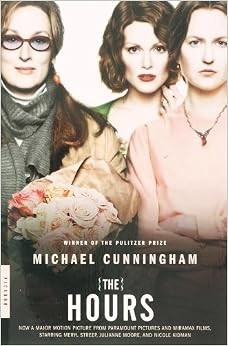
The Hours, by Michael Cunningham

Get Free Ebook The Hours, by Michael Cunningham
Exactly what's the style of publication that will make you fall in love? Is one of guide that we will offer you here the one? Is this truly The Hours, By Michael Cunningham It's so eased to recognize that you love this kind of book genre. Also you don't know yet guide is actually written about, you will recognize from th
When The Hours, By Michael Cunningham is offered you, it's clear that this book is extremely compatible for you. The soft file idea of this likewise brings convenience of just how you will certainly appreciate the book. Naturally, taking pleasure in guide can be only done by reading. Reviewing the books will lead you to constantly recognize every word to compose and every sentence to utter. Lots of people occasionally will have different methods to utter their words. Nevertheless, from the title of this book, we make certain that you have recognized what exactly get out of the book.
By reading this publication The Hours, By Michael Cunningham, you will obtain the most effective point to get. The brand-new point that you do not need to spend over money to get to is by doing it alone. So, just what should you do now? Check out the link page and download the publication The Hours, By Michael Cunningham You can get this The Hours, By Michael Cunningham by on the internet. It's so simple, isn't really it? Nowadays, modern technology truly assists you activities, this on the internet e-book The Hours, By Michael Cunningham, is too.
You could find the link that we provide in website to download and install The Hours, By Michael Cunningham By buying the economical price and obtain completed downloading and install, you have actually finished to the first stage to get this The Hours, By Michael Cunningham It will be absolutely nothing when having purchased this publication and do nothing. Read it as well as disclose it! Spend your few time to merely review some sheets of web page of this publication The Hours, By Michael Cunningham to read. It is soft file and also easy to check out wherever you are. Enjoy your new routine.
Review
“A smashing literary tour de force and an utterly invigorating reading experience. If this book does not make you jump up from the sofa, looking at life and literature in new ways, check to see if you have a pulse.” —USA Today“An exquisitely written, kaleidoscopic work that anchors a floating postmodern world on pre-modern caissons of love, grief, and transcendent longing.” —Los Angeles Times“Cunningham has created something original, a trio of richly interwoven tales...his most mature and masterful work.” —The Washington Post Book World
Read more
About the Author
Michael Cunningham was raised in Los Angeles and lives in New York City. He is the author of the novels A Home at the End of the World (Picador) and Flesh and Blood. His work has appeared in The New Yorker and Best American Short Stories, and he is the recipient of a Whiting Writer's Award. The Hours was a New York Times Bestseller, and was chosen as a Best Book of 1998 by The New York Times, Los Angeles Times, and Publishers Weekly.
Read more
Product details
Mass Market Paperback: 240 pages
Publisher: Picador (November 9, 2002)
Language: English
ISBN-10: 0312305060
ISBN-13: 978-0312305062
Product Dimensions:
5.6 x 0.7 x 8.3 inches
Shipping Weight: 6.4 ounces (View shipping rates and policies)
Average Customer Review:
4.2 out of 5 stars
529 customer reviews
Amazon Best Sellers Rank:
#373,512 in Books (See Top 100 in Books)
Genius. Sheer genius. Based on Virginia Woolf's "Mrs. Dalloway," this book by Michael Cunningham takes the barest outline of that British classic and twists it. And twists it again. And again. It follows a day in the life of Clarissa as she prepares to host a party for her dear friend, Richard, who is dying of AIDS and will receive a literary award for his poetry that evening. But it also follows an imaginary day in the life of Virginia Woolf as she writes "Mrs. Dalloway," as well as a day in the life of an American housewife, Mrs. Brown, in the late 1940s. The stories of Clarissa and Mrs. Brown are tragically joined at the end of the book. I highly advise you to either read Virginia Woolf's "Mrs. Dalloway" first or concurrently (as I did) to fully appreciate the many ways the two books intersect.
This remains one of the books im always recommending.How can someone keep living a life that's not their own, just to make people happy? They keep thinking life is good because making people happy makes them happy but the point where they reach the understanding that their life is not their own, it is heartbreaking but it lights the hope of life. No one can know what happens in other shoes unless you walk with them, and the motives and actions of some people may seem awful but for others might be the light of life illuminating everything.Live the moment, your moment.
Despite the dark tone of death, and disillusionment presented throughout the story. Michael Cunningham crafted a clever depiction of the deteriorating lives, and relationships, of three women, uncannily connecting them to a single, tragic, ‘bright June day.’ Cunningham’s The Hours pays tribute to the triumphant hours that each of us sift out from the mundane, claustrophobic, and sometimes tragic other moments of human existence. The novel is a replete with figurative language, similies, metaphors, personification and symbols, coming together in associations, similar to a lyrical essay. The author’s brilliant mimicking of Woolf’s modernistic style in the use of internal monologue, stream of consciousness, original metaphors, and carefully chosen words, creates an almost poetic quality, and connects a pattern of similar images, of different women, at different times, each struggling with the dilemmas of middle-age; the novel come together as a metaphor of Woolf’s own tragic life.Laura Brown, a housewife at on the cusp of middle age, pregnant with her second child, tries desperately to connect to her three year old son, and struggles with depression, disillusionment of living a stereotypical female life, and suicidal ideation, mirroring the demons that afflicted Woolf herself prior to her own suicide, in 1941. Clarissa Vaughn, dubbed Mrs. Dalloway (a character from a novel written by Woolf), by her ill-fated, bi-sexual, lover, Richard Brown, who not only is similar to the tragic character Septimus Smith, in the Woolf novel, but her story mirrors Woolf’s real life bohemian lifestyle where she had an open relationship with a man who had a separate gay lover, and where Woolf herself had a same sex relationship with Vita Sachville-West. Cunningham cleverly sets the tone of the story by weaving elements of the famous author’s own life, as tragic metaphors—of Mrs. Dalloway (Vaughn) and Mrs. Laura Brown, comparing them with Woolf’s own life in 1923, as she recovers from mental illness in the suburbs with her husband while writing her novel, Mrs. Dalloway, and planning a tragedy, that foreshadows, Richard Brown’s demise, in Clarissa’s story.The clever use of language, and stream of consciousness similar to a modernist style, and the precise, vivid, descriptive language, that paints pictures into the mind of the reader, captures Woolf’s own unique style and enhances the melancholy tone of the novel. The author uses his character descriptions, not only to set the tone of the story, but to foreshadow its tragic ending, stating:She straightens her shoulders as she stands at the corner ofEighth Street and Fifth Avenue, waiting for the light… Shestill has a certain sexiness; a certain bohemian, good-witch sort of charm; and yet this morning she makes a tragic sight, standing so straight in her big shirt and exotic shoes, resisting the pull of gravity, a female mammoth already up to its knees in the tar,taking a rest between efforts, standing bulky and proud, almostnonchalant, pretending to contemplate the tender grasses waiting on the far bank when it is beginning to know for certain that it will remain here, trapped and alone, after dark, when the jackals comeout. (Cunningham, 13). Through Clarissa’s story, Cunningham cleverly crafts his theme into the first few pages of his novel, “she loves the world, for being rude and indestructible, and she knows other people must love it too … Why else do we struggle to go on living, no matter how compromised, no matter how harmed?†(Cunningham, 15). Like Woolf, Cunningham is able to develop original, fresh metaphors that capture an image, and compares her madness, and debilitating headaches to a “scintillating silver-white mass … like a jellyfish.†(Cunningham, 70). Cunningham use of a cake to represent ‘disappointment’ in Laura Brown’s story is Poignant, and reminiscent of the manner Woolf takes the mundane, in Mrs. Dalloway, and makes it remarkable. It compares the cake to her ‘life as a mother and housewife.’ Laura’s ability to bake a simple birthday cake for her husband transcends her success or failure as a wife and mother. “The cake will speak of bounty and delight the way a good house speaks of comfort and safety.†(Cunningham, 76). When she begins the process, Laura is filled with anticipation of a great accomplishment, “she hopes to be as satisfied and as filled with anticipation as a writer putting down the first sentence, a builder beginning to draw the plans†(Cunningham, 77) but in the end, Laura Brown is disappointed, “[t]he cake is less than she’d hoped it would be.†The cake parallels the disillusionment she has for her life, “there’s nothing really wrong with it, but she’d imagined something more. She’d imagined it larger, more remarkable.†(Cunningham, 99). Cunningham goes even further with his metaphor. He compares the disappointments in Virginia Woolf’s life, with the failure of Brown to make a remarkable cake. “Would she rather …have her cake sneered at? Of course not … she wants to be a competent mother … a wife who sets a perfect table. She does not want … to be the strange woman, the pathetic creature, … tolerated but not loved. Virginia Woolf put a stone into the coat of her pocket, walked into a river, and drowned.†(Cunningham, 101). Further, the subtle reference to an unknown illness revealed in Brown’s story of her neighbor and (wanton lover) Kitty, is metaphoric when compared to Clarissa’s allusive love interest in her friend and former lover, Richard Brown, who is dying of aids. Additionally, Cunningham places subtle references to the influence of the sexual abuse that plagued Woolf throughout her life, into the stories of these different women, as well as her homoerotic nature. Brown, kisses her child and feels something more than motherly love stirring, Clarissa’s kiss of her daughter Julia, and Woolf’s strange kiss with her sister Vanessa, stir restlessly below the surface, like the “innocent kiss†in the kitchen that “feels like the most delicious and forbidden of pleasures.†(Cunningham, 154). Cunningham also sets up a metaphor where Brown’s suicidal ideation, as she rents a room to read a novel (ironically by Woolf) and is directly compared with Woolf’s own ideations, “She could decide to die… She imagines Virginia Woolf, virginal, unbalanced, defeated by the impossible demands of life and art, she imagines her stepping into a river with a stone in her pocket. …it would be as simple [] [] as checking into a hotel.†(Cunningham, 152). Through it all, Cunningham manages to eke out a positive, message from a dark theme of death, disintegrating relationships and disillusionment, by comparing the hours of ‘brightness’ in each story, Brown’s joy in her son’s tender moments of love and endearment, Clarissa’s romanticism, and love of nature, and of flowers—set in a natural way, compare with Woolf’s sudden realization that life hold’s precious moments that make all of the other dismal hours seem worthwhile, “there is this hour, now, in the kitchen†with her sister Vanessa, drinking tea, “[h]ow could she bear to leave all this?†And the forbidden pleasures of a “Kiss.†(Cunningham, 154). Like a lyrical essay, with its poetic language streaming in the reader’s imagination, Cunningham ties his story together with delicate associations, and subtle metaphorical images that mesmerize, and leave a reader with a better understanding of modern literature; so immutable, touching, squeezing, and stimulating the soul of each of us with a unique, a
Not having read or knowing anything about Virginia Woolf, The Hours is a haunting and thoughtful work. Cunningham places three completely unrelated main characters and story lines that he manages to brilliantly weave around themes regarding life and death. His literary skills are masterful. It is a relatively short book that reads quickly. The book brings to life the role of women and the silence of women suffering from an earlier period of time. Now I need to pick up and read Mrs. Dalloway.
Probably THE most boring pretentious book I have ever read! It rambled on incessantly until I wanted to scream "get to the point!". And that was just in the first five chapters .Oh, I understood what it was about, but it wasn't worth the extensive effort I put into reading this dull book.Want a really great book to read, War and Peace.
Beautifully written (as is any work by Cunningham) and wonderfully innovative. Cunningham masterfully weaves this intertwining narrative together and expertly explores the themes and steam of consciousness of "Mrs. Dalloway". I was so absorbed by every page, right until the end, I didn't want to put it down. I'm surprised by the negative reviews, which seem to just not really get it.
How did I ever miss this book? It won the Pulitzer Prize and other prestigious awards. How did I miss the movie? Virginia Woolf is one of my favorite writers. Because my name, Clarissa, was rare while growing up, I always made a point to read books whose heroine, like Mrs. Dalloway, shared that first name. So how did I miss this? I must remain grateful for accidentally stumbling across a volume that echoes fleeting thoughts and feelings during the course of a lifetime. There is not much I can add in a review about a multi award-winning book that is so close to perfection, but I want to encourage anyone interested in Virginia Woolf, lesbian/gay issues or suicide to consider reading it. It is so much more than issues, of course. That is merely one level. At times, Cunningham's voice is identical to Woolf's, reminiscent of the novel To The Lighthouse or the essay A Room of One's Own, the magical, almost unbearable, Virginia Woolf sentences that many of us have aspired to emulate but never could write. I finished reading this spectacular story in tears...
The Hours, by Michael Cunningham PDF
The Hours, by Michael Cunningham EPub
The Hours, by Michael Cunningham Doc
The Hours, by Michael Cunningham iBooks
The Hours, by Michael Cunningham rtf
The Hours, by Michael Cunningham Mobipocket
The Hours, by Michael Cunningham Kindle
0 komentar