Download PDF How to Live Safely in a Science Fictional Universe: A Novel, by Charles Yu
Desember 19, 2010Download PDF How to Live Safely in a Science Fictional Universe: A Novel, by Charles Yu
By clicking the link that our company offer, you can take guide How To Live Safely In A Science Fictional Universe: A Novel, By Charles Yu flawlessly. Attach to internet, download, and also conserve to your gadget. Just what else to ask? Reviewing can be so simple when you have the soft file of this How To Live Safely In A Science Fictional Universe: A Novel, By Charles Yu in your gizmo. You can also copy the data How To Live Safely In A Science Fictional Universe: A Novel, By Charles Yu to your workplace computer system or in the house as well as in your laptop computer. Merely share this excellent information to others. Recommend them to visit this resource and obtain their looked for books How To Live Safely In A Science Fictional Universe: A Novel, By Charles Yu.
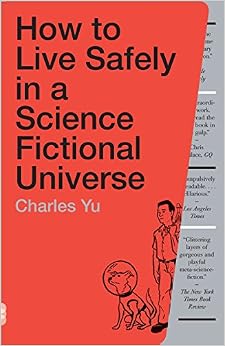
How to Live Safely in a Science Fictional Universe: A Novel, by Charles Yu

Download PDF How to Live Safely in a Science Fictional Universe: A Novel, by Charles Yu
Just how if your day is started by checking out a book How To Live Safely In A Science Fictional Universe: A Novel, By Charles Yu However, it remains in your gadget? Everyone will certainly consistently touch and also us their gizmo when getting up as well as in morning activities. This is why, we intend you to additionally check out a publication How To Live Safely In A Science Fictional Universe: A Novel, By Charles Yu If you still confused the best ways to obtain the book for your gadget, you can comply with the means below. As right here, we provide How To Live Safely In A Science Fictional Universe: A Novel, By Charles Yu in this internet site.
Now, your time is to produce the various atmosphere of your day-to-day live. You may not really feel that it will be so silent to know that this publication is definitely your own. And just how you can await guide to review, you could just locate the web link that has been given in this website. This website will certainly provide you all soft duplicate fie of guide that can be so very easy to find out about. Associated with this condition, you could really recognize that guide is attached constantly with the life as well as future.
The presented book How To Live Safely In A Science Fictional Universe: A Novel, By Charles Yu we offer here is not type of normal book. You know, reading currently does not indicate to handle the printed book How To Live Safely In A Science Fictional Universe: A Novel, By Charles Yu in your hand. You can get the soft data of How To Live Safely In A Science Fictional Universe: A Novel, By Charles Yu in your gadget. Well, we mean that guide that we extend is the soft file of the book How To Live Safely In A Science Fictional Universe: A Novel, By Charles Yu The content and all things are same. The difference is just the kinds of guide How To Live Safely In A Science Fictional Universe: A Novel, By Charles Yu, whereas, this condition will exactly be profitable.
This is just what you can take from this publication. By soft data types, you can be offered to read it in the gizmo when you remain in your method home in vehicle or bus and even train. It is your time likewise to read it when you are remaining in a waiting listing. As well as how you can check out How To Live Safely In A Science Fictional Universe: A Novel, By Charles Yu in your home could use the moment prior to resting and also working.
Review
"Glittering layers of gorgeous and playful meta-science-fiction. . . . Like [Douglas] Adams, Yu is very funny, usually proportional to the wildness of his inventions, but Yu's sound and fury conceal (and construct) this novel's dense, tragic, all-too-human heart. . . . Yu is a superhero of rendering human consciousness and emotion in the language of engineering and science. . . . A complex, brainy, genre-hopping joyride of a story, far more than the sum of its component parts, and smart and tragic enough to engage all regions of the brain and body."—The New York Times Book Review "Compulsively rereadable. . . . Hilarious. . . . Yu has a crisp, intermittently lyrical prose style, one that's comfortable with both math and sadness, moving seamlessly from delirious metafiction to the straight-faced prose of instruction-manual entries. . . . [The book itself] is like Steve Jobs' ultimate hardware fetish, a dreamlike amalgam of functionality and predetermination."—Los Angeles Times "Douglas Adams and Philip K. Dick are touchstones, but Yu's sense of humor and narrative splashes of color–especially when dealing with a pretty solitary life and the bittersweet search for his father, a time travel pioneer who disappeared–set him apart within the narrative spaces of his own horizontal design. . . . A clever little story that will be looped in your head for days. No doubt it will be made into a movie, but let's hope that doesn't take away the heart."--Austin Chronicle "If How to Live Safely in a Science Fictional Universe contented itself with exploring that classic chestnut of speculative fiction, the time paradox, it would likely make for an enjoyable sci-fi yarn. But Yu's novel is a good deal more ambitious, and ultimately more satisfying, than that. It's about time travel and cosmology, yes, but it's also about language and narrative — the more we learn about Minor Universe 31, the more it resembles the story space of the novel we're reading, which is full of diagrams, footnotes, pages left intentionally (and meaningfully) blank and brief chapters from the owner's manual of our narrator's time machine. . . . . Yu grafts the laws of theoretical physics onto the yearnings of the human heart so thoroughly and deftly that the book's technical language and mathematical proofs take on a sense of urgency."--NPR"How to Live Safely is a book likely to generate a lot of discussion, within science fiction and outside, infuriating some readers while delighting many others."--San Francisco Chronicle "An extraordinary work. . . . I read the entire book in one gulp." —Chris Wallace, GQ"A great Calvino-esque thrill ride of a book."--The Stranger "Science and metaphor get nice and cozy in Charles Yu's How to Live Safely in a Science Fictional Universe. The novel joins the likes of Gary Shteyngart's Super Sad True Love Story and Jillian Weise's The Colony, fiction that borrows the tropes of sci-fi to tell high-tech self-actualization narratives."--Portland Mercury "A brainy reverie of sexbots, rayguns, time travel and Buddhist zombie mothers. . . . Packed with deft emotional insight."--The Economist"A funny, funny book, and it’s a good thing, too; because at its heart it’s a book about loneliness, regret, and the all-too-human desire to change the past."--Tor.com "A keenly perceptive satire. . . . Yu’s novel is also a meditation on the essentials of human life at its innermost point.. . . Campy allusions to the original Star Wars trilogy, a cityscape worthy of the director’s cut of Blade Runner and a semi-coherent vocabulary of techno-jargon cement these disparate elements into a brilliant send-up of science fiction. . . . Perhaps it would be better to think of the instructional units of How to Live Safely in a Science Fictional Universe in terms of the chapters of social commentary which John Steinbeck placed into the plot structure of The Grapes of Wrath."--California Literary Review "How to Live Safely in a Science Fictional Universe is the rare book I pick up to read the first several pages, then decide to drop everything and finish at once. Emotionally resonant, funny, and as clever as any book I have read all year, this debut novel heralds the arrival of a talented young writer unafraid to take chances."--largehearted boy"A wild and inventive first novel . . . has been compared to the novels of Kurt Vonnegut Jr. and Jonathan Lethem, and the fact that such comparisons are not out of line says everything necessary about Yu's talent and future."--Portland Oregonian"Bends the rules of time and literary convention."--Seattle Weekly "Getting stuck with Yu in his time loop is like watching an episode of Doctor Who as written by the young Philip Roth. Even when recalling his most painful childhood moments, Yu makes fun of himself or pulls you into a silly description of fake physics experiments. In this way, he delivers one of the most clear-eyed descriptions of consciousness I've seen in literature: It's full of self-mockery and self-deception, and yet somehow manages to keep its hands on the wheel, driving us forward into an unknowable future. How to Live Safely in a Science Fictional Universe is intellectually demanding, but also emotionally rich and funny. . . . It's clearly the work of a scifi geek who knows how to twist pop culture tropes into melancholy meditations on the nature of consciousness."—io9“Funny [and] moving. . . . Charles Yu's first novel is getting ready for lift-off, and it more than surpasses expectations which couldn’t be any higher after he was given the 5 Under 35 Award . . . How to Live Safely in a Science Fiction Universe is one of the trippiest and most thoughtful novels I've read all year, one that begs for a single sit-down experience even if you're left with a major head rush after the fact for having gulped down so many ideas in a solitary swoop. . . . Yu's literary pyrotechnics come in a marvelously entertaining and accessible package, featuring a reluctant, time machine-operating hero on a continual quest to discover what really happened to his missing father, a mysterious book possibly answering all, and a computer with the most idiosyncratic personality since HAL or Deep Thought. . . . Like the work of Richard Powers . . . How to Live Safely in a Science Fictional Universe fuses the scientific and the emotional in ways that bring about something new.”—Sarah Weinman, The Daily Beast“One of the best novels of 2010. . . . It is a wonderfully stunning, brilliant work of science fiction that goes to the heart of self-realization, happiness and connections. . . . Yu has accomplished something remarkable in this book, blending science fiction universes with his own, alternative self's life, in a way, breaking past the bonds of the page and bringing the reader right into the action. . . . Simply, this is one of the absolute best time travel stories . . . even compared to works such as The Time Machine by H.G. Wells or the Doctor Who television series.” —SF Signal "Within a few pages I was hooked. . . . There are times when he starts off a paragraph about chronodiegetics that just sounds like pseudo-scientific gibberish meant to fill in some space. And then you realize that what he’s saying actually makes sense, that he’s actually figured out something really fascinating about the way time works, about the way fiction works, and the “Aha!” switch in your brain gets flipped. That happened more than once for me. There are so many sections here and there that I found myself wanting to share with somebody: Here—read this paragraph! Look at this sentence! Ok, now check this out!”—GeekDad, Wired.com"In this debut novel, Charles Yu continues his ambitious exploration of the fantastic with a whimsical yet sincere tribute to old-school science fiction and quantum physics. . . . A fascinating, philosophical and disorienting thriller about life and the context that gives it meaning."—Kirkus, starred review"With Star Wars allusions, glimpses of a future world, and journeys to the past, as well as hilarious and poignant explanations of “chronodiegetics,” or the “theory of the nature and function of time within a narrative space,” Yu, winner of the National Book Foundation’s 5 under 35 Award, constructs a clever, fluently metaphorical tale. A funny, brain-teasing, and wise take on archetypal father-and-son issues, the mysteries of time and memory, emotional inertia, and one sweet but bumbling misfit’s attempts to escape a legacy of sadness and isolation."—Booklist "This book is cool as hell. If I could go back in time and read it earlier, I would." —Colson Whitehead, author of Sag Harbor "Charles Yu is a tremendously clever writer, and How to Live Safely in a Science Fictional Universe is marvelously written, sweetly geeky, good clean time-bending fun."—Audrey Niffenegger, author of Her Fearful Symmetry and The Time Traveler's Wife"Funny, touching, and weirdly beautiful. This book is awesome."—Nick Harkaway, author of The Gone-Away World"How to Live Safely in a Science Fictional Universe is that rare thing—a truly original novel. Charles Yu has built a strange, beautiful, intricate machine, with a pulse that carries as much blood as it does electricity."—Kevin Brockmeier, author of The View from the Seventh Layer and The Brief History of the Dead"Poignant, hilarious, and electrically original. Bends time, mind, and genre."—David Eagleman, author of Sum
Read more
About the Author
Charles Yu is the author of How to Live Safely in a Science Fictional Universe, Sorry Please Thank You, and Third Class Superhero and worked as a storyboard editor on Westworld. He received the National Book Foundation’s 5 Under 35 Award and was a finalist for the PEN Center USA Literary Award. His work has been published in The New York Times, Playboy, and Slate, among other periodicals. Yu lives in Los Angeles with his wife, Michelle, and their two children.
Read more
See all Editorial Reviews
Product details
Paperback: 256 pages
Publisher: Vintage (June 28, 2011)
Language: English
ISBN-10: 9780307739452
ISBN-13: 978-0307739452
ASIN: 0307739457
Product Dimensions:
5.2 x 0.8 x 8 inches
Shipping Weight: 9.6 ounces (View shipping rates and policies)
Average Customer Review:
3.4 out of 5 stars
213 customer reviews
Amazon Best Sellers Rank:
#51,088 in Books (See Top 100 in Books)
I want to say I remember seeing this in the New Yorker when it first came out. I looked for it again when I read a newer release on theories of time travel that cited this book a lot. Pretty sure it was “Time Travel: A History†by James Gleick.It’s not really a story. Well, it kind of is. The narrator having the same name as the author and it tells the story of his father inventing time travel and a kid looking up to his father. But if you’re in this for the plot, you might be let down a bit.There is a blurb on the cover of my edition calling this a “A great Calvino-esque thrill ride of a bookâ€. That really directed me how to read this book. It turns out that it is not science fiction. It science metafiction or metascience fiction. I’m not sure which one fits better. It’s a book about science fiction and time travel and paradoxes. It is an interesting text if you approach it in that sort of manner. I hated Invisible Cities, but loved If on a winter’s night a traveler, so I can image there are some mixed reactions here. In any manner, it is worth the read you just have to know to come at it obliquely.
(Partly read in Kindle, partly heard in audiobook. This review reflects both.)Story Flavor: Post-modern psycho-social technological sci-fi (think "Raw Shark Texts" has a baby with "Psychohistorical Crisis" that gets adopted and raised by "Hollow Chocolate Bunnies of the Apocalypse").Audio Narration Flavor: Ascerbic, all-knowing humor reminiscent of noir tough-guy, blended with the tentative consideration of a philosophy student....and, believe it or not, that was the perfect voice to narrate this book. Many kudos to the audiobook narrator, and the producer who seems to have carefully read the book before choosing him.The story follows a main character through a bildungsroman event with the unlikely catalyst of getting stuck in a time loop. As is typical, the reader will not necessarily like the main character in the beginning, but will inevitably be pulling for him (partially facilitated by the fact that he is quite literally confronting his own mortality; partially facilitated by the considerable and constant self-referential/fourth-wall-eclipsing nature of the book that gives the distinct notion that the whole thing may not be the main character's fault and perhaps the author is a meta-villain) and the supporting characters around him (for having to deal with him). The flavor text of the book is rife with partially scientific theories and considerations of what disciplines would have to develop in a universe wherein time travel is common and a recreational commodity. It also dabbles in geography, literature, and a numerical view of sociology. Very interesting, and each tidbit discussed in just enough detail to leave the reader wanting more.This is also one of the more sensible methods of handling the concept of a loop in time travel. Anyone who wants to explore the loop concept without getting dizzy should enjoy this book.There is one character that was severely underdeveloped throughout the book, and that was Ed the dog. Do not expect the dog to be a source of humor or non-vocal comment for the storyline, as he serves more to demonstrate the nature of the world the author is telling.Overall summary: Five out of five. Excellent read. One of the rare Post-moderns that gives the reader plenty to consider without regretting the reading and getting depressed.
I am a big fan of his and only read this book because he got such high reviews on a short story in The New Yorker Magazine. If you like "the Hitchhiker's Guide", Douglas Adams - you will like this. Very creative on several levels. Charles Yu is science fiction on steroids and possibly late night pizza. I usually read biography, business, and history books.
Yu’s novel supposes that time travel is a very real phenomenon; however, one can only travel to universes that one is prepared to see. The protagonist, a time machine repairman, through the course of the novel reveals how time travel works while winding readers through his rather domestic personal family history.The novel is strongest where it imagines the science fictional universe that the protagonist spends his time in (a partially finished, relatively small universe). It also is strong where the novel shows us how people use time travel when it is commonplace (the protagonist’s mother repeating a short loop of cooking and serving dinner was especially memorable).Unfortunately the majority of the novel lays down a fairly common and uncomplicated approach to father/son husband/wife family dynamics with only a tangential connection to the science fictional time travel world the author created. That is to say, the science fiction ends up serving as “local color†for a family story that is relatively forgettable or at least whose dynamics have been well trod.I’d recommend the novel for readers interested in a fascinating take on the idea of time travel, but the family history that bogs down the more interesting aspects of the novel is a hazard that may try the reader’s patience.
Not at all what I was expecting, but I loved it all the same. This was a different writing style that I was expecting, but it worked for the story. A good mix of humor, sci-fi, and philosophy.
A new favorite book of all time (along with Le Guin's The Lathe of Heaven and nearly anything by S Lem). It's very funny for those with a passing knowledge of quantum physics (at least at the popular level) and appreciation of social satire and philosophy, especially dealing with the question of free will.It might be amusing to those who have already read the book that just today I ran across a new (and serious) physics article titled, "Categorical Semantics for Time Travel," at arxiv.org/abs/1902.00032. The intro begins: "We introduce a general categorical framework to reason about quantum theory and other process theories living in spacetimes where Closed Timelike Curves (CTCs) are available, allowing resources to travel back in time and provide computational speedups."Charles Yu takes this kind of language and mashes it up into a brilliant and hilarious read. It even has some very personal and meaningful underlying themes, which made me think about interpersonal relationships.
How to Live Safely in a Science Fictional Universe: A Novel, by Charles Yu PDF
How to Live Safely in a Science Fictional Universe: A Novel, by Charles Yu EPub
How to Live Safely in a Science Fictional Universe: A Novel, by Charles Yu Doc
How to Live Safely in a Science Fictional Universe: A Novel, by Charles Yu iBooks
How to Live Safely in a Science Fictional Universe: A Novel, by Charles Yu rtf
How to Live Safely in a Science Fictional Universe: A Novel, by Charles Yu Mobipocket
How to Live Safely in a Science Fictional Universe: A Novel, by Charles Yu Kindle
0 komentar